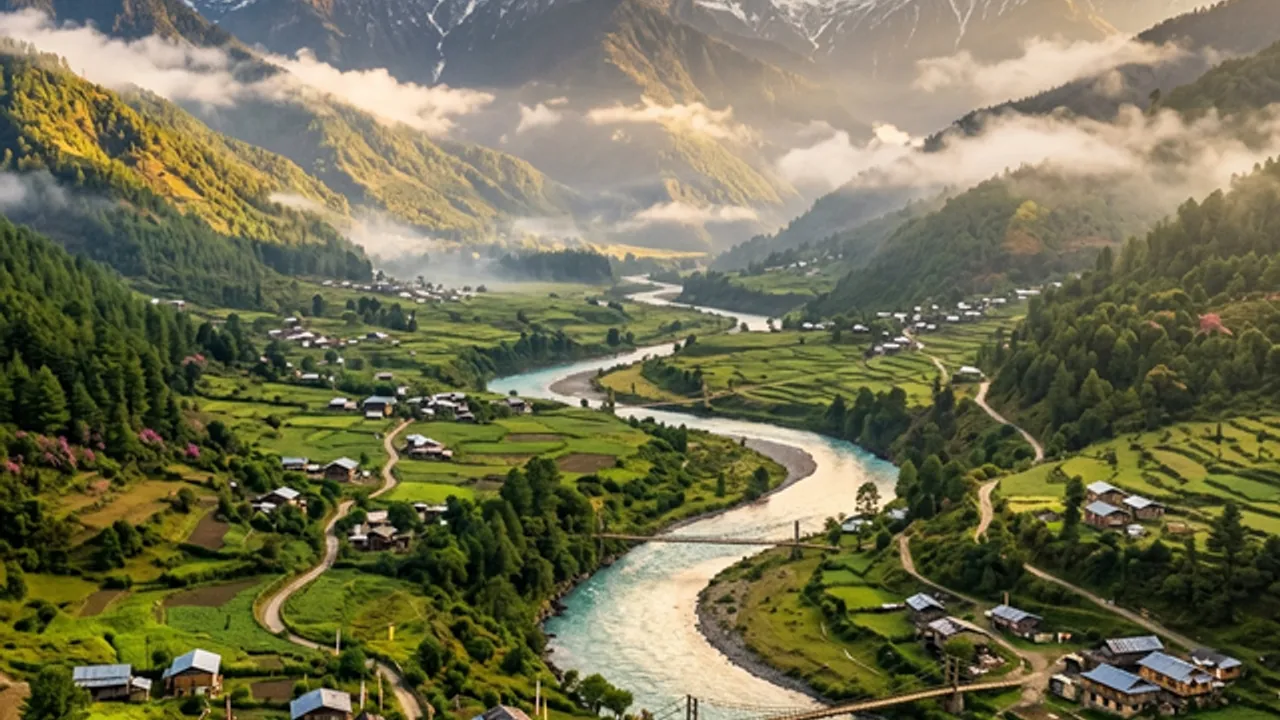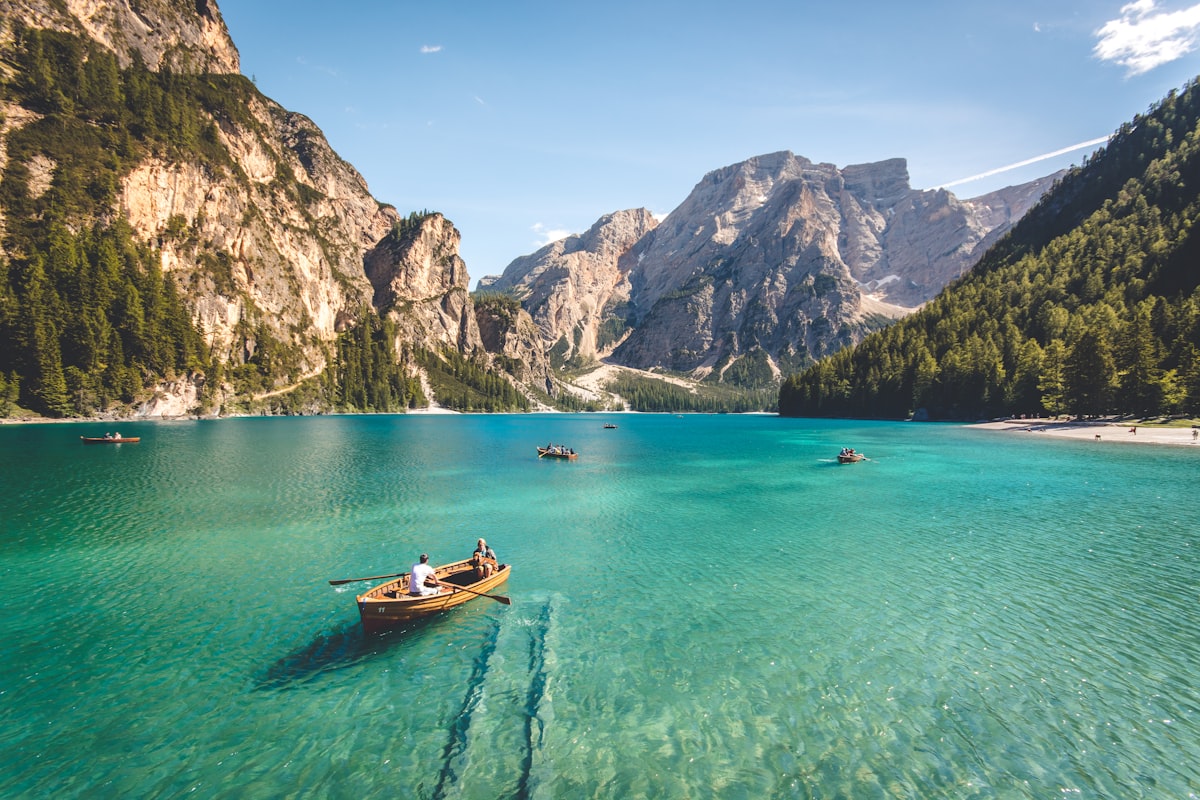
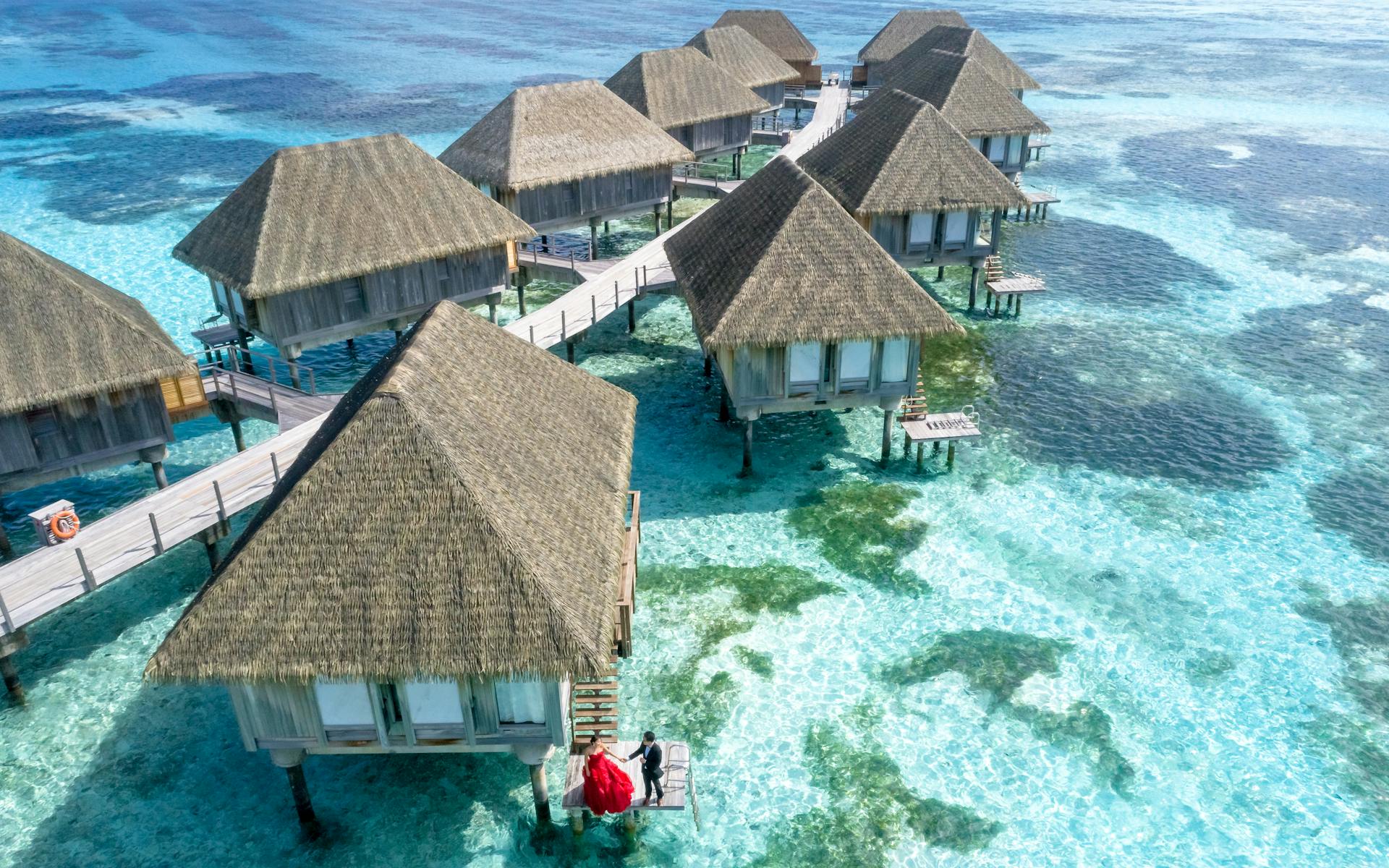
The water is a colour that doesn't exist anywhere else in India. Not the blue-green of Andaman or the grey-brown of Goa — this is the turquoise of coral atoll lagoons, so clear in November that you can see the reef floor at eight metres without putting your face in the water. Bangaram Island in Lakshadweep is 1.2 square kilometres of white sand, living coral, and near-total silence, sitting 40 kilometres off the Kerala coast in the Arabian Sea. Most Indians have heard of it. Very few know how to actually get there. This guide fixes that.
"You reach Bangaram and you understand immediately why marine biologists fight to keep it this way. The reef is not just healthy — it is extraordinary. You can spend a week here and not see everything the lagoon holds."— Rasheed K., PADI dive master and TravelBuddiz local host, Agatti Island (8 years)

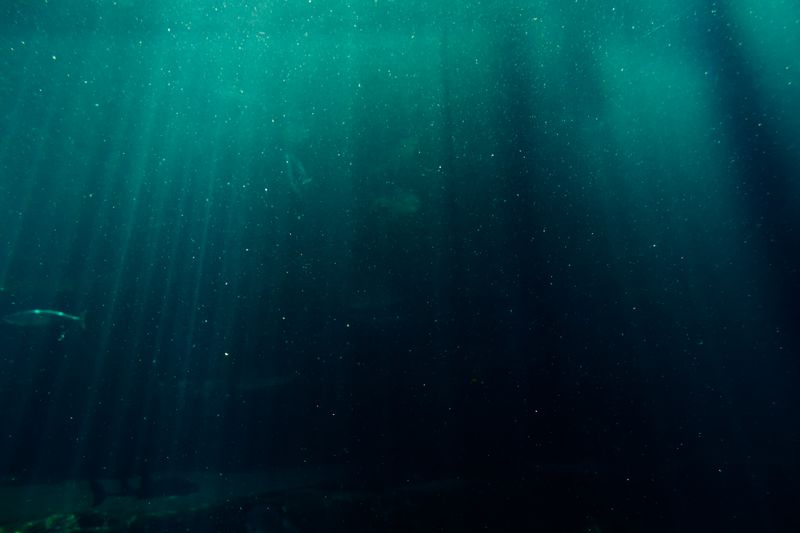
Why Bangaram Is One of India's Most Beautiful Islands
Bangaram is part of the Lakshadweep archipelago — a group of 36 coral islands administered as a Union Territory of India, scattered across the Arabian Sea between 220 and 440 kilometres from the Kerala coast. The islands are the northernmost coral atolls in the Indian Ocean, and their isolation is precisely what has preserved them.
The island itself is uninhabited except for resort staff and visiting guests. There are no roads, no vehicles, no market stalls calling after you. What Bangaram has instead is one of the healthiest coral reef ecosystems in the entire Indian Ocean — the IUCN rates Lakshadweep's reefs among the least-degraded in Asia, with coral bleaching rates far below those of Southeast Asian and Maldivian counterparts.
Pristine Lagoon
Water clarity up to 30 metres. In shallow sections, reef detail is visible from the surface without snorkel gear.
Living Coral Reefs
Over 600 species of marine life across staghorn, brain, and table coral formations — among the richest in India.
Zero Commercial Noise
No nightclubs, no road traffic, no hawkers. The loudest sound at 6 AM is the reef breaking on the outer edge.
Sea Turtle Habitat
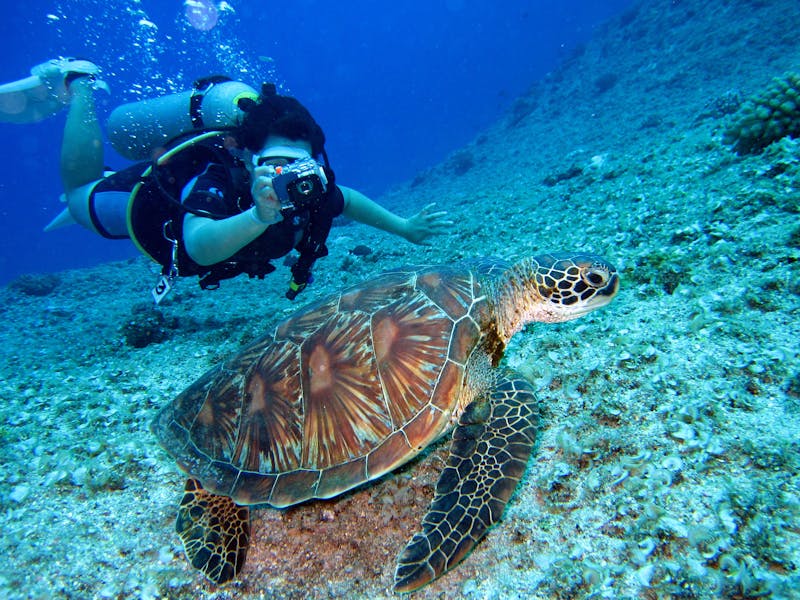
Green and hawksbill sea turtles nest and forage in the lagoon — commonly sighted even from the beach.
World-Class Diving
PADI-certified dive centres, manta ray cleaning stations, reef walls, and wreck sites within boat distance.
Arabian Sea Sunsets
West-facing beach with unobstructed horizon. No other land visible in any direction. The sky does extraordinary things here.
If you find yourself searching for India's genuinely offbeat destinations, Bangaram belongs at the top of that list — not because it's obscure, but because its logistics keep it inaccessible to casual visitors. The permit system, the limited flights to Agatti, and the single resort on the island mean that at any given time, there are only a few dozen people here. That is the entire point.
Best Time to Visit Bangaram Island
Weather determines everything in Lakshadweep. The island sits directly in the path of the Arabian Sea monsoon — the same system that hammers Kerala's coast from June to September. Timing your visit correctly is not a preference; it is a logistical necessity.
| Season | Months | Conditions | Tourism Status |
|---|---|---|---|
| ✦ Peak Season | November – March | 25°C–30°C, calm seas, 20–30 m visibility | Ideal — all activities, all dive sites open |
| Shoulder Season | October, April | Warm, occasional light showers | Good — fewer tourists, better rates |
| Monsoon | June – September | Rough seas, heavy rain, 2–4 m waves | Limited — most resorts suspended, boat transfers cancelled |
| ⚠ Avoid | May, June early | Pre-monsoon swells building | Unpredictable — transfers often cancelled last-minute |
How to Reach Bangaram Island: Step-by-Step
The journey to Bangaram is a three-stage process. None of it is difficult, but all of it requires advance planning — particularly the permit, which must be arranged through an authorised operator before you book flights.
Stage 1 — Reach Kochi, Kerala
Kochi (Cochin) is the mainland gateway to all of Lakshadweep. It is well-served by air, rail, and road.
- By Air: Direct flights from Delhi, Mumbai, Bangalore, Chennai, Hyderabad, and all major Indian cities to Kochi International Airport (COK). Fares from Delhi typically run ₹3,500–8,000 one-way.
- By Train: Ernakulam Junction (ERS) is one of the best-connected stations on the west coast. Book via IRCTC.
- By Road: NH 544 and NH 966 connect Kochi to Tamil Nadu and Karnataka.
Stage 2 — Kochi to Agatti Island
Agatti Airport (IATA: AGX) is the only operating airport in Lakshadweep, and reaching it is the logistical crux of the trip.
- By Air (strongly recommended): Air India operates regular turboprop flights from Kochi to Agatti Airport (AGX). Flight time is approximately 1 hour 30 minutes. Seats are limited and fill up months ahead during peak season — book the moment your permit is confirmed.
- By Passenger Ship: The Lakshadweep Administration operates ship services from Kochi to multiple islands, departing from Willingdon Island. Journey to the northern islands takes 14–18 hours depending on route. Ships are significantly cheaper but dependent on weather and scheduling — not recommended for trips under 7 days.
Stage 3 — Agatti to Bangaram
From Agatti, a resort-operated boat transfers guests directly to Bangaram in approximately 45 minutes across open water. This transfer is included in most resort packages. The boat departs on a fixed schedule tied to flight arrivals.
Top Things to Do in Bangaram Island
For an island of 1.2 square kilometres, the range of experiences is remarkable. The activity list at Bangaram is not padded with manufactured tourist attractions — it is genuinely determined by the island's extraordinary natural environment.
-
1
Snorkelling in the Coral Lagoon
The shallow lagoon surrounding Bangaram is one of the most biodiverse marine environments accessible to non-divers anywhere in India. In knee-to-waist-deep water you can observe staghorn and brain coral formations, moorish idol and parrotfish, green and hawksbill sea turtles, and — on early morning excursions — reef sharks resting on the sandy floor. Equipment is available through the resort activity centre. Visibility exceeds 20–25 metres from November to March.
-
2
Scuba Diving (Beginners & Certified)
Bangaram is India's premier scuba destination for those who prioritise reef quality over party boats. PADI-certified centres offer Discover Scuba for first-timers (no certification required), full Open Water courses, and guided dives to advanced sites for certified divers. Manta Point, Shark Point, and the underwater cave systems near the island's southern rim are among the finest dive sites in the subcontinent. See the full dive section below.
-
3
Sea Kayaking and Water Sports
The calm, glassy lagoon makes Bangaram ideal for non-motorised water activities. Sea kayaking along the reef rim at low tide, glass-bottom boat rides for non-swimmers, paddleboarding along the beach perimeter at dawn, and deep-sea fishing for yellowfin tuna, barracuda, and mahi-mahi are all available from the resort water sports centre.
-
4
Sunset Walks and Photography
Bangaram's western beach faces an unbroken Arabian Sea horizon — no other island visible in any direction. The light between 5:30 and 7 PM in January does something to the water surface that no photograph quite captures. Walk the full beach perimeter at low tide (under 30 minutes). Bring a wide-angle lens if you have one. The sky here has too much happening in it for a phone camera.
-
5
Spinner Dolphin Excursions
Spinner dolphins are consistently encountered in the open water between Bangaram and Agatti. Morning boat excursions arranged through the resort regularly meet pods of 30–100 individuals. Spinner dolphins are highly active and aerial — watching them breach and spin alongside the boat is one of the genuinely unrepeatable memories Bangaram delivers.
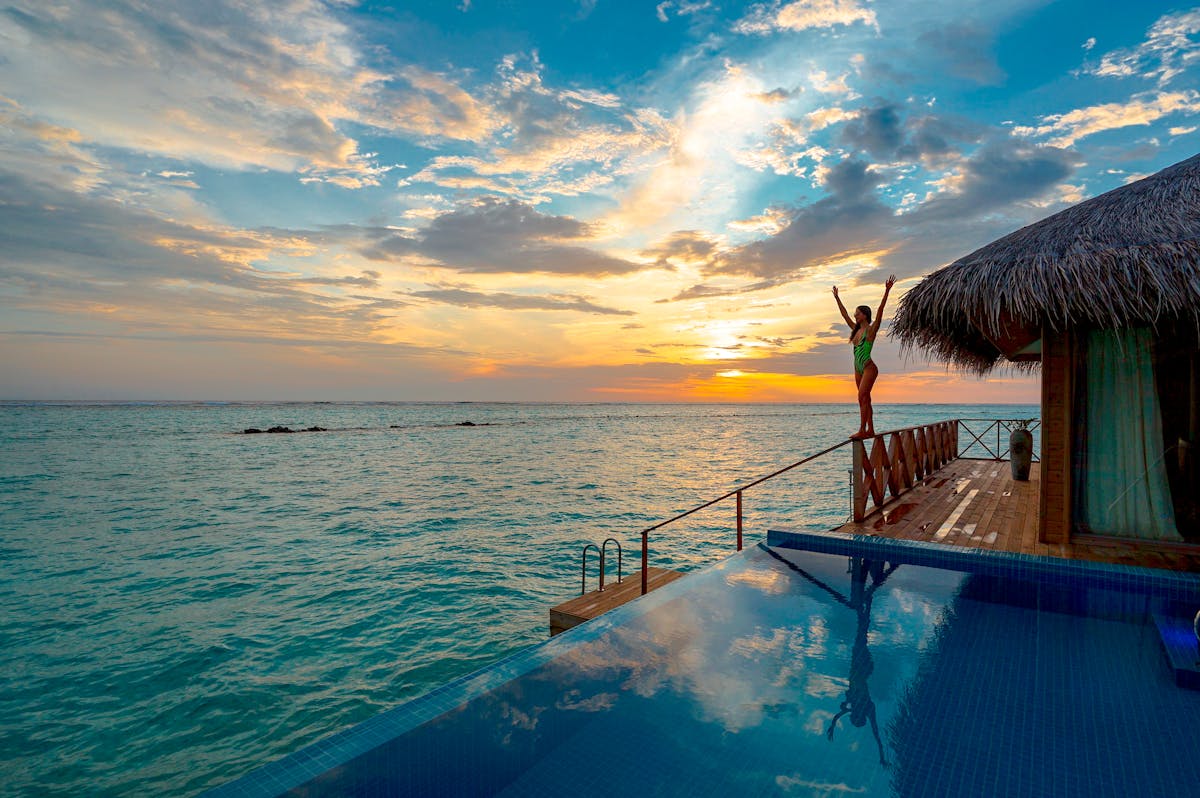
Bangaram's lagoon — water clarity like this is why divers specifically travel to Lakshadweep
Scuba Diving at Bangaram: India's Finest Reef Diving
Ask any serious diver in India where to find the country's best reef diving and the answer is almost always Lakshadweep — specifically Bangaram, Agatti, and the uninhabited reef systems around Kavaratti. The combination of warm water (27–29°C year-round), exceptional visibility, undisturbed reef architecture, and consistently healthy coral makes this a destination that competes credibly with the Maldives at a fraction of the cost.
Shark Point
Reef sharks, nurse sharks, and occasional hammerheads rest on the sandy floor at the lagoon mouth. Best at dawn before boat traffic increases.
12–25 m depthManta Point
Oceanic manta rays visit a cleaning station near the outer reef edge. October–January sightings are most consistent.
15–30 m depthCoral Wall
A vertical reef wall dropping 30+ metres along the southern rim. Lionfish, moray eels, and Napoleon wrasse are resident.
8–35 m depthAgatti Wreck
A sunken vessel accessible by 20-minute boat ride. Now fully colonised by soft corals and schooling fish. Accessible from intermediate level.
18–28 m depthTurtle Garden
The lagoon's shallowest dive site — a seagrass meadow where green turtles graze. Ideal for Discover Scuba participants.
5–12 m depthUnderwater Caves
Swim-through caverns carved into the reef base. Requires Advanced Open Water certification. Extraordinary light conditions inside.
20–32 m depth| Dive Experience Level | What's Available | Approximate Cost (₹) |
|---|---|---|
| Complete beginner | Discover Scuba Diving — guided shallow dive, no cert needed | 3,500–5,000 |
| Beginner (wants cert) | PADI Open Water course — 3–4 days, full certification | 18,000–25,000 |
| Open Water certified | 2-dive guided packages to reef and wall sites | 4,500–7,000/day |
| Advanced certified | Deep sites, wreck, caves, Manta Point excursions | 5,500–9,000/day |
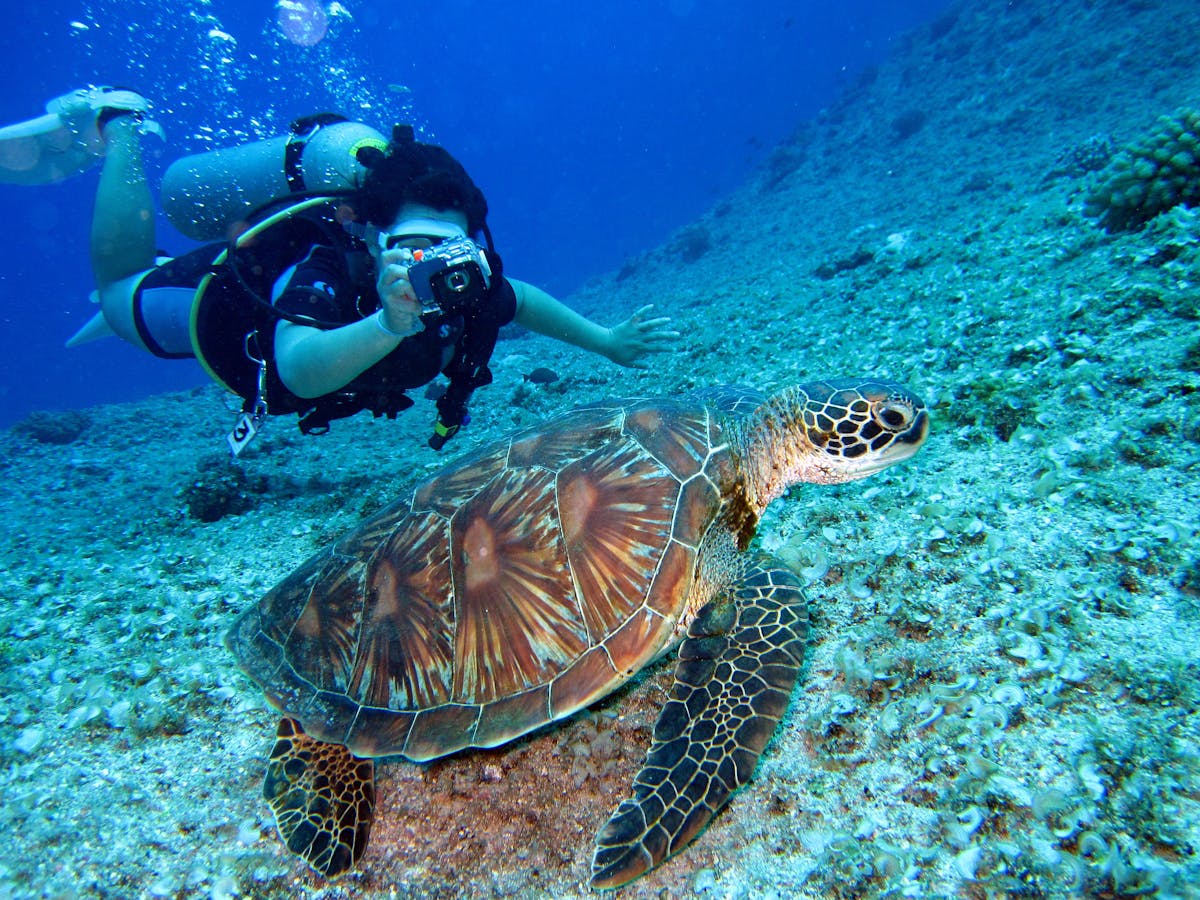
Bangaram's outer reef wall — visibility regularly exceeds 25 metres from November to March
Essential Bangaram Island Travel Tips
Booking and Permits
Bangaram's extreme remoteness and single-resort structure means logistics require considerably more advance planning than most Indian destinations. Start the process at least 3 months before your target travel dates during peak season (November–February).
- Permits must be arranged through your authorized tour operator before purchasing flights — never in reverse order.
- The Lakshadweep Administration and the Society for Promotion of Nature Tourism and Sports (SPORTS) manage official tourism bookings for government-operated options.
- Flights from Kochi to Agatti are limited and heavily booked during peak months — purchase the moment your permit is confirmed.
- Resort accommodation at Bangaram is extremely limited — there is one property. Waiting for better availability is not a viable strategy.
🎯 Insider Tips from TravelBuddiz Hosts
Cash is the only currency here: No ATM, no card machines, no UPI anywhere on Bangaram. Carry enough Indian Rupees for your full stay — including tips for resort staff, additional dives, boat excursions, and any incidentals. Withdraw at Kochi before boarding the Agatti flight. The nearest ATM from Bangaram is on Agatti, and its availability is not guaranteed.
Reef-safe sunscreen only: Standard chemical sunscreens containing oxybenzone and octinoxate are harmful to coral DNA and bleach reefs within hours of contact. Use mineral-based (zinc oxide or titanium dioxide) SPF only. This is not a preference — in many reef zones globally it is legally enforced, and ecologically it matters here enormously.
Download everything before Kochi: Internet at Bangaram is limited to basic resort Wi-Fi, often slow and unreliable. Download offline maps (Google Maps offline or Maps.me), your booking confirmations, dive course PDFs, and any media before you leave the mainland. You will not regret the preparation.
Pack light for the boat transfer: The 45-minute boat from Agatti to Bangaram can be wet — particularly in October and April when seas are slightly choppier. Keep valuables (passports, cameras, cash) in a waterproof dry bag. Resort staff will assist with luggage but anything electronic should be in your carry-on dry bag.
Go without expectations of connectivity: The best thing Bangaram does for most visitors is force a complete digital detox. Lean into it. The guests who struggle are those who fight it. The guests who come back are those who decided, on day one, to be entirely present.
Sustainable Travel in Lakshadweep: Why It Matters Here
Lakshadweep's coral reefs are not just beautiful — they are ecologically irreplaceable. The archipelago's position in the central Indian Ocean makes its reef systems a critical nursery habitat for dozens of commercially important fish species. Damage here has consequences that extend far beyond tourism.
🌿 Eco-Responsible Bangaram Checklist
Community-based travel models like TravelBuddiz bring an additional layer of accountability. Smaller group sizes mean lower reef impact per visitor. Local host income stays within the island community rather than flowing to mainland tour operators. And the knowledge that local hosts share — which reef sections are in recovery, which turtle nesting areas to avoid — is conservation education that no resort brochure provides.
Bangaram vs Havelock vs Goa: Which Indian Island Is Right for You?
The honest comparison between Bangaram, Havelock (Swaraj Dweep in Andaman), and Goa is not really a competition — they serve fundamentally different travelers. Here is the breakdown.
| Feature | Bangaram, Lakshadweep | Havelock, Andaman | Goa |
|---|---|---|---|
| Coral reef quality | ✦ Exceptional — among India's finest | Good, some degradation | Minimal |
| Crowd level | Very low (few dozen guests) | Moderate–High | Very high |
| Permit required | Yes — 2–4 weeks in advance | No | No |
| Diving quality | World-class reefs, mantas, walls | Good — wall dives, turtles | Limited |
| Beach quality | Pristine, empty, white sand | Excellent — Radhanagar Beach | Variable — often crowded |
| Connectivity / ease | Complex — limited flights, one resort | Moderate — regular ferries | Easy — multiple airports |
| Cost level | High (premium resort only) | Moderate–High | Variable |
| Best for | ✦ Serious divers, solitude, nature | Mixed travelers, beaches | Nightlife, food, leisure |
For serious nature travelers and divers, Bangaram wins without contest. The reef quality, the silence, and the controlled access that protects both mean that it offers an experience that Havelock, for all its legitimate appeal, simply cannot match at this stage of its development.
Frequently Asked Questions About Bangaram Island
Bangaram Is Still Here, Still Pristine — But Not Forever
Bangaram Island is not just beautiful — it is one of the last genuinely unspoiled island environments accessible to Indian travelers. The turquoise lagoons, living coral, and near-total absence of commercial development make it an experience that cannot be replicated once lost. Plan properly, go with local knowledge, and leave it exactly as you found it.
Find Lakshadweep Trips with Local Hosts → Meet Verified Local Hosts