Nobody told me the most honest thing about Varanasi before I arrived: it doesn't care about your budget. The city that has received pilgrims for three thousand years — people who walked here barefoot from the Deccan, from Bengal, from Nepal — it received you too, and it will charge you nothing for what matters most. The priests will not ask your bank balance before they ring the bell. The Ganga will not charge an entry fee at dawn. The narrow galis of the old city smell the same whether you are staying in a ₹350 dorm bunk or a ₹5000 heritage suite. That is the great secret of Varanasi: luxury here is spiritual, not material.
This guide is built on that truth. You can experience everything essential about Kashi — the Ganga Aarti at full volume, the best kachori-sabzi in Uttar Pradesh, the quiet of Manikarnika at 4 AM, the classical music drifting from a rooftop in Godowlia — for under ₹1000 a day. On careful days, ₹700 is entirely possible.
"Varanasi is not a place you visit. It is a place that happens to you. And the best parts of it are absolutely free."
— Ramesh Tiwari, ghat-side chai vendor, Assi Ghat (his family has run the same stall for 40 years)
Budget Stays: Why Assi Ghat Beats Dashashwamedh Every Time
The first mistake most first-timers make in Varanasi is booking a guesthouse near Dashashwamedh Ghat. Yes, it's central. Yes, it's close to the main aarti. But you will pay 30–40% more for that proximity, and what you gain in convenience you lose in sanity — the noise, the touts, and the tourist density near the central ghats are relentless.
Head south instead. Assi Ghat, about 3.5 km from Dashashwamedh, is a different city. It is where the students of Banaras Hindu University drink chai in the evenings, where sadhus sit in genuine meditation rather than posing for photos. The hostels here are cleaner, the hosts more honest, and the morning light on the river is, if anything, more beautiful because the crowd is thinner.
Best Base
Assi Ghat Guesthouses
The southern end of the ghat strip offers the best value in the city. Dorm beds: ₹250–400. Private rooms (river view or garden): ₹600–950. Many include a simple breakfast of poha and chai. Walk north along the river to any other ghat — it takes 35–50 minutes on foot, and the walk is the experience.
🛏️
Dorm Bed
₹250–400/night near Assi Ghat. Clean sheets, fan or AC, shared bathrooms.
🪟
Private Room
₹600–950/night for a private double with attached bath, possibly river view.
📍
Best Streets
Assi Lane and Shivala — 5-min walk from the ghat, quieter, better prices.
⚠️
Avoid
Any guesthouse on the main Dashashwamedh road — triple the price, half the peace.
Book your first two nights in advance — especially October through February when the city fills with pilgrims. After that, walk around and negotiate directly. Many guesthouses cut their price by 20% if you ask politely in person for a multi-night stay.
Eat Like a King for Under ₹150
Varanasi has one of the most underrated food cultures in India, and most of it happens not in restaurants but at small stalls wedged into the lanes that run between the ghats. The city's culinary identity is deeply rooted in its Brahmin cooking tradition — pure vegetarian, generous with ghee, complex with spices — which means food here tends to be both excellent and very cheap because the raw ingredients are inexpensive.
🫓
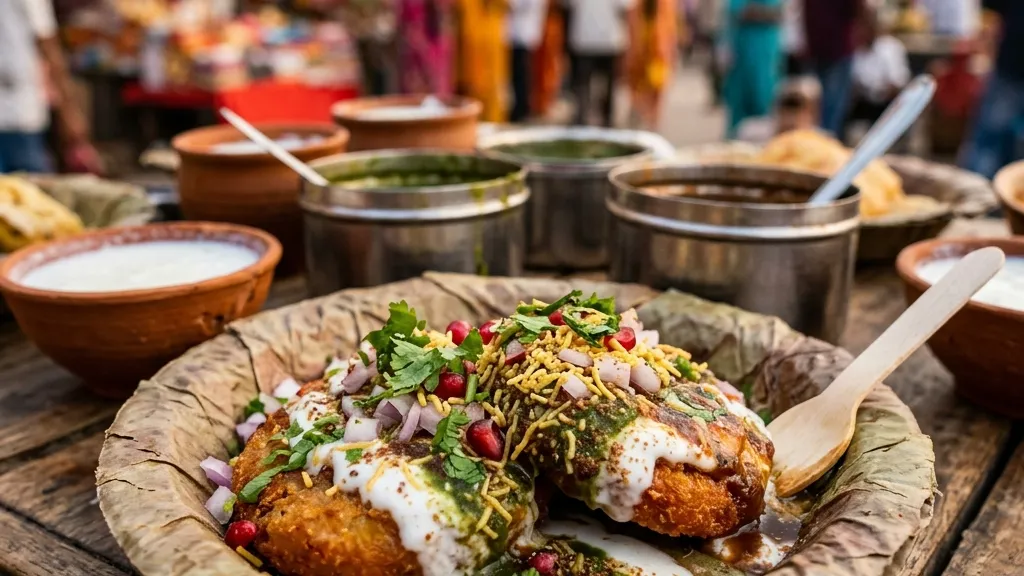
Kachori-Sabzi
₹30–50
Deep-fried lentil pastry with spiced potato-pea curry. The definitive breakfast. Look for the stall near Kashi Vishwanath that has been open since 5 AM every day since 1968.
🍚
Baati Chokha
₹80–120
Roasted wheat balls with fire-charred mashed eggplant and tomato chutney. Genuinely filling. Two baati and chokha will keep you full for four hours.
🍬
Malaiyo
₹20–40
Winter-only. Cold-whipped milk froth with saffron and cardamom, available October–February at dawn only. It melts before 8 AM. Find it near Thatheri Bazaar.
🍵
Kulhad Chai
₹10–15
Served in an unglazed clay cup you smash when done. At Ramesh's stall at Assi Ghat, the first cup of the day, before 6 AM, tastes like the best thing you have ever drunk.
🍭
Thandai
₹40–60
Cold spiced milk with rose petals, fennel, cardamom, and (optionally) a bhang variant. Best from the blue-fronted shop in Godowlia. Ask clearly about the variant you want.
🥘
Thali at Dhaba
₹60–100
Dal, two sabzis, rice, roti, and raita. Any dhaba inside the old city lanes will fill you completely. Never eat at a restaurant facing a major ghat — they triple the price.
Gut health note: The water in Varanasi is not safe to drink unbottled. Buy a large 5L bottle from a general store (₹40) rather than paying ₹20 per 500ml bottle at tourist stalls. Stick to cooked food for your first two days while your stomach adjusts.
12 Free Experiences That Define Varanasi
This is the section that makes budget travelers realize Varanasi is different from every other Indian city. Everywhere else, the "best" experiences cost money — the fort ticket, the cable car, the guided tour. Here, the things that will stay with you for the rest of your life are the things that cost nothing.
DawnThe Morning Walk: Assi to Manikarnika
4:45 AM
Leave Assi Ghat in darkness
The city stirs before the sun. Sadhus are already on the steps. The sound is not silence but something thicker — low chanting from temples, the quiet slap of water against stone boats, distant bells. Walk north along the river's edge. Cost: ₹0.
5:15 AM
Sunrise at Kedar Ghat
Stop here when the first orange light hits the opposite bank. The temples on the Varanasi side go deep red. Pilgrims who have walked from Bihar overnight are just now reaching the river. Sit on the steps. Nobody will charge you anything or try to sell you anything at this hour.
6:00 AM
Manikarnika Ghat
The burning ghat. Approach with genuine respect — this is an active cremation ground, not a tourist site. Men of the Dom community manage the eternal fire that has reportedly burned without interruption for centuries. Stand quietly, do not photograph. You will understand something here that cannot be explained in words.
6:45 AM
Kachori breakfast in the lanes
Plunge into the galis behind Dashashwamedh. The breakfast stalls are fully operational now. Order kachori-sabzi and chai. ₹45 total. You have walked 4 km and seen more than most people see on a 3-day guided tour.
EveningGanga Aarti: The Free Version
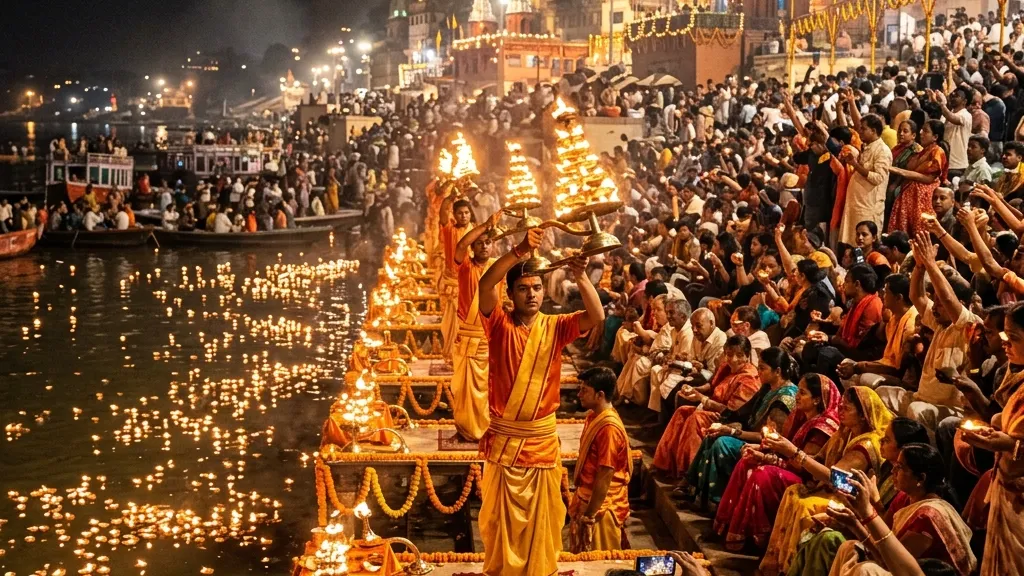
Every budget guide will tell you to take a boat for the aarti. Ignore them. The boat costs ₹150–300 per person and puts you 40 metres from the ceremony looking at it through other people's phones. Instead: arrive at Dashashwamedh Ghat by 5:30 PM on any evening and find a seat on the stone steps, as high up as you can get. When seven priests simultaneously lift the massive brass oil lamps, the Ganga reflects the fire back upward, and the bells hit a frequency that gets inside your chest. You are ten metres away. It costs nothing.
"I spent ₹400 on a boat for the aarti on my first night. On the second night I sat on the steps for free. The steps were better."
— Priya, solo traveler from Bengaluru, via TravelBuddiz community
🕌
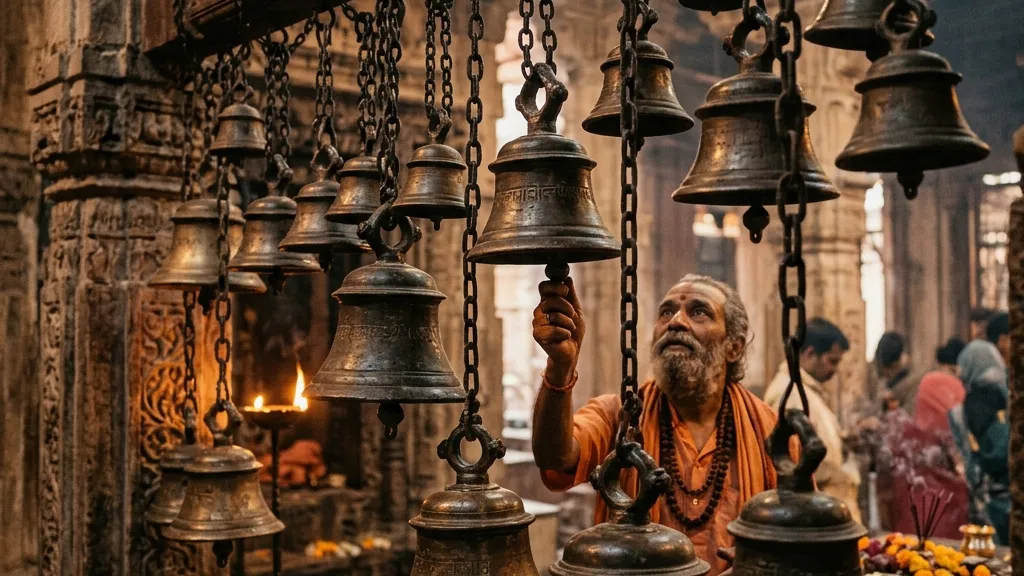
Kashi Vishwanath Lane
Walk through the old temple lane (non-Hindus cannot enter the main temple but can observe the exterior and the activity). Free.
🎵
Rooftop Music Sessions
Check notice boards at hostels near Assi — free classical music sessions happen 3–4 evenings per week, often by BHU music students.
📚
Banaras Hindu University
The Bharat Kala Bhavan museum has a nominal ₹20 entry fee. The campus itself — one of Asia's largest — is free to walk through.
🌅
Sarnath
13 km from the city center. Where the Buddha gave his first sermon. Archaeological museum: ₹30. The site itself and the Dhamek Stupa: ₹40 for Indians. Auto from Varanasi: ₹80–100 shared.
Getting Around Varanasi Without Getting Ripped Off
Varanasi's old city is essentially pedestrian. The galis — the lanes — are too narrow for anything larger than a bicycle. This works powerfully in your favour as a budget traveler: your feet are your primary vehicle, and they are free.
How to reach Varanasi cheaply:
Train is the best option. Book through IRCTC. Sleeper class from Delhi: ₹350–450 (overnight, 8–10 hrs). From Mumbai: ₹550–650 (24 hrs). From Kolkata: ₹350–420 (12 hrs). The station is Varanasi Junction (BSB) for most trains. Lal Bahadur Shastri Airport (VNS) has budget flights but adds transfer costs.
🚶
Walking
The ghat walk (Assi to Raj Ghat, ~5.5 km) costs ₹0. Do it at least once each direction. The lanes of the old city are best explored entirely on foot.
🛺
E-Rickshaw
₹10–20 per seat (shared) for most intra-city routes. Never take the first price. ₹50 is the max you should pay for any single-journey private ride within the old city.
⛵
Boat Ride
Official UTDB boats: ₹100–150 for a 30-min shared ride. Private boats ask ₹400–800 — negotiate down to ₹200 or share with other travelers at the ghat.
🚌
To Sarnath
City bus from Varanasi Cantonment: ₹15. Shared auto: ₹30. Private auto: ₹180–220. The bus is an experience in itself.
The Real Budget Breakdown: What Does a Day Actually Cost?
These are honest numbers, based on a solo traveler staying in a dorm at Assi Ghat and eating only from street stalls and local dhabas. Prices are as of early 2026.
Category
Budget Option
Cost (₹)
Notes
Accommodation
Dorm bed, Assi Ghat
₹300
Fan-cooled, shared bath, breakfast sometimes included
Breakfast
Kachori-sabzi + chai
₹45
Two kachoris, one bowl sabzi, one kulhad chai
Lunch
Thali at lane dhaba
₹80
Dal, sabzi, rice, roti, raita
Snacks
Chaat, thandai, lassi
₹60
One thandai, one plate tamatar chaat
Dinner
Baati chokha or thali
₹100
Slightly more substantial than lunch
Transport
E-rickshaw + walking
₹40
1–2 short e-rickshaw rides; most movement on foot
Attractions
Mostly free; occasional temple
₹30
Ganga Aarti = free; BHU museum = ₹20; Sarnath = ₹40
Water
5L bottle from store
₹40
Buy from a general store, not tourist stalls
DAILY TOTAL
Comfortable budget day
₹695
Well under the ₹1000 target
Joining a TravelBuddiz group trip to Varanasi can cut your per-person accommodation and boat costs by nearly 40–50% — group bookings get better rates on everything from guesthouses to private ghats for sunset ceremonies.
⚡ Pro Tips From People Who've Actually Lived Here
→
Arrive on a Tuesday or Saturday to catch the smaller weekly Sankat Mochan temple events. Free, deeply attended by locals only, no tourist apparatus around them.
→
Never buy boat rides at the ghat steps. Walk 100m back from the river and negotiate with the boat-owner families directly. Same boat, same water, 40% less money.
→
The silk scam is alive and well. If someone offers to show you their uncle's silk shop "just for looking," you will spend 45 minutes and possibly ₹3000. The silk is real but the price is 4x. Buy on Vishwanath Gali where prices are marked.
→
Book Sarnath for the early morning, not afternoon. The light in the Mulagandha Kuti Vihara before 8 AM is extraordinary. The afternoon crowds and heat make it feel like a different — much worse — place.
→
The Dev Deepawali festival (the full moon of Kartik, usually November) turns the entire ghat strip into a river of light. Book accommodation 3 months in advance. Even dorm prices triple. Worth every rupee of the ₹500–600 you'll pay for a basic room.
→
Check TravelBuddiz community hosts in Varanasi — some local families offer home stays from ₹400/night including a home-cooked meal, which beats every hostel on both price and experience.
What to Pack: The Honest Varanasi List
✓
Closed-toe shoes or sandals you can wash — the ghat steps and lanes are perpetually damp and occasionally unidentifiable.
✓
A light cotton dupatta or scarf — for temple entry, sun cover, and general modesty in the old city. Buys you enormous respect.
✓
Offline maps (Maps.me or OsmAnd) — the old city lanes are a genuine labyrinth and cell data is often patchy in the densest galis.
✓
ORS sachets or Electral — even in cooler months, the walking distance is significant. Dehydration hits fast.
✓
Cash in small denominations — street food stalls never break a ₹500 note. Have plenty of ₹10–50 notes ready.
✓
A headlamp or phone torch — the pre-dawn ghat walk is transformative but the narrow lanes are genuinely dark.
Frequently Asked Questions
You can comfortably experience Varanasi for ₹700–1000 per day. A dorm bed near Assi Ghat: ₹250–350. A full meal of kachori-sabzi or baati chokha: ₹60–100. The Ganga Aarti, ghat walks, and temple areas are free. On a careful day you can spend as little as ₹650 without sacrificing any of the essential experiences.
Assi Ghat area is the best base for budget travelers. It is quieter, cheaper (30–40% less than central ghats), and has a strong backpacker community with genuine cafes and hostels. Good hostels charge ₹250–400 for a dorm and ₹600–950 for a private room with attached bath. The 40-minute walk north to the aarti ghat is part of the experience.
Yes — completely free from the ghat steps. Arrive at Dashashwamedh Ghat by 5:30 PM and find a spot as high on the steps as possible. The standing view is actually better than the boat view because you are close enough to hear the bells and chanting clearly. Boat rides (₹150–300) put you farther away with a camera crowd around you.
Train is cheapest. Book through IRCTC (irctc.co.in). Varanasi Junction (BSB) is the main station. Sleeper class from Delhi: ₹350–450 on the Poorva Express or Vibhuti Express (overnight, 8–10 hrs). From Mumbai: ₹550–650 (24 hrs). From Kolkata: ₹350–420 (12 hrs). Flights from Delhi cost ₹2000–3500 but add ₹200–300 for the airport transfer each way.
October to March is ideal. Weather is cool (15–25°C), the Ganga water levels are stable, and November brings Dev Deepawali — the festival of a hundred thousand lamps on the ghats — which is one of the most visually extraordinary events in India. Avoid May–June (temperatures exceed 45°C) and July–August (flooding, very high humidity, though the monsoon city has its own dark beauty if you can handle the heat).
This city has hosted pilgrims with no money and pilgrims with vast wealth for three millennia. It treats them roughly the same. Come with an open heart, comfortable shoes, and ₹1000 in your pocket. You will leave richer than you arrived.
Authored by verified hosts at TravelBuddiz India. Specializing in secure local-led travel, 0% platform commission, Aadhaar KYC verification frameworks, and curated road trips. Learn more about how we verify travel partners on our Safety Page.
More Travel Reads
Recommended for You
Handpicked guides and verified itineraries curated by local hosts.