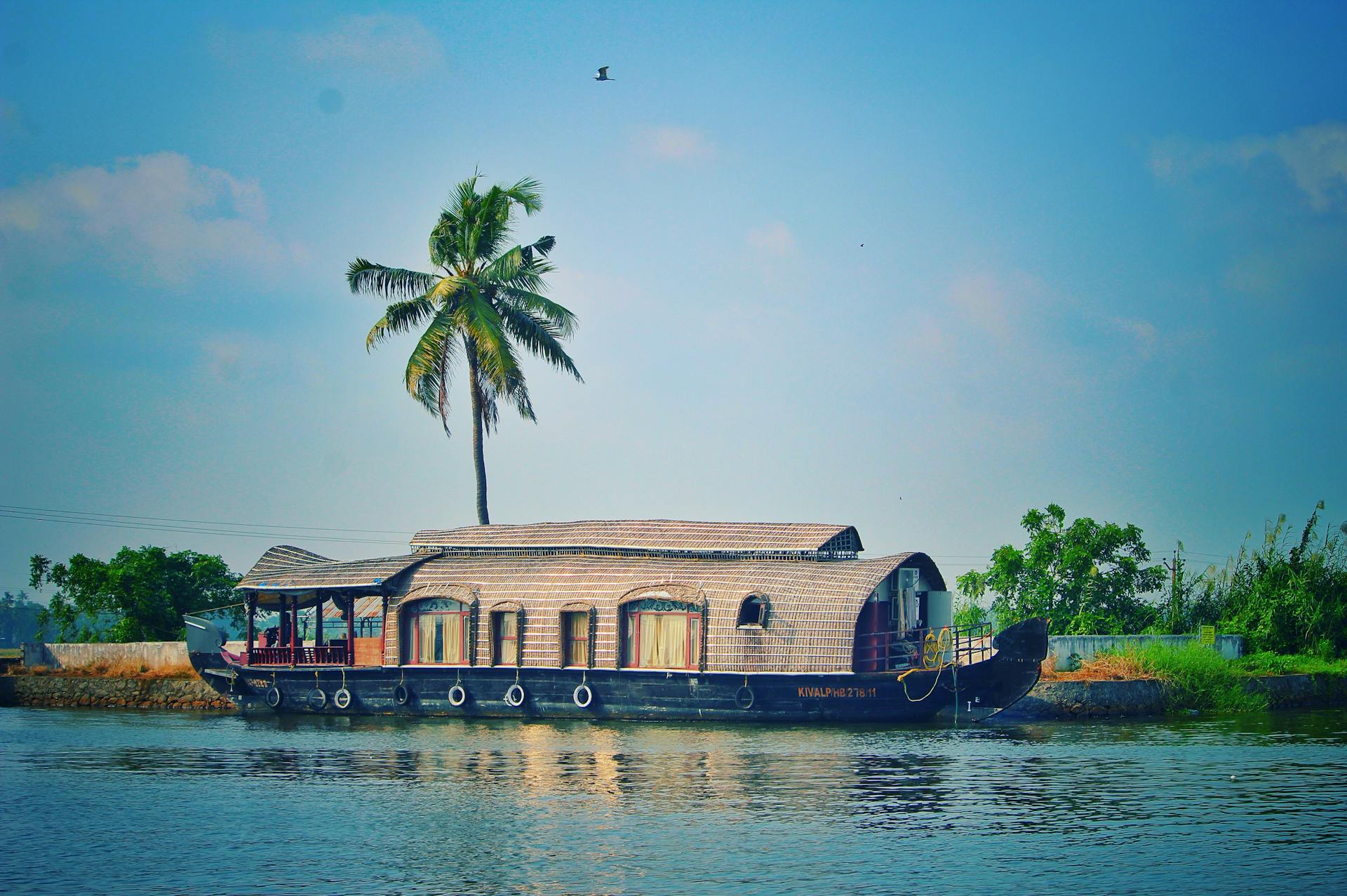
Kerala doesn't reveal itself in monuments or skylines. It reveals itself in the hour before sunrise, when the mist sits low over a tea garden at 1,600 metres and the only sound is birdsong and the distant clinking of the first pickers arriving. It reveals itself in the width of a backwater canal so narrow that the coconut palms on either bank touch overhead, making a tunnel of green over your houseboat. It reveals itself in the specific weight of a Kerala Sadya served on a fresh banana leaf — twenty-four dishes, not one of them familiar, and not one of them forgettable. Seven days is enough to understand the shape of this state. It is not enough to stop wanting more.
"People come to Kerala looking for backwaters. They leave having understood something about slowness they didn't know they were missing."
— Rajan Nair, Verified Local Host · Alleppey, Kerala
Trip Overview at a Glance
| Feature | Details |
|---|---|
| Duration | 7 Days / 6 Nights |
| Starting Point | Kochi (COK Airport / Ernakulam Junction) |
| Key Destinations | Kochi → Munnar → Thekkady → Alleppey → Varkala → Kovalam → Kanyakumari |
| Best Time to Visit | October to March (Monsoon: June–September for Ayurveda) |
| Budget Range | ₹25,000 – ₹45,000 per person (including stay, meals, transport) |
| Accommodation Style | Heritage homestays, tea estate bungalows, backwater houseboat |
| Trust Model | Verified Host + 10% Escrow Protection + OTP Handshake |
| Fitness Level | Easy to Moderate (some hill walking in Munnar/Thekkady) |
Kochi — The Cultural Gateway
Fort Kochi smells like salt, old wood, and coffee grounds. The Chinese fishing nets are already in the water by 6 AM — enormous cantilever structures, teak and bamboo, operated by teams of four who haul and release in a rhythm they learned from watching their grandfathers. You watch, buy the fish they pull out for ₹80, and walk it across the road to a woman named Latha who will fry it for ₹30. That is your first meal in Kerala.
Chinese Fishing Nets + St. Francis Church
Walk the Fort Kochi waterfront at dawn. The cheena vala are most active at first light. St. Francis Church (built 1503) is the oldest European church in India — Vasco da Gama was buried here before his body was returned to Portugal.
Mattancherry Palace + Jew Town Spice Market
The Dutch Palace (built by the Portuguese in 1555, handed to the Dutch in 1663) houses extraordinary Kerala murals depicting scenes from the Ramayana — the detail is startling. Ten minutes walk brings you to Jew Town and its spice merchants, where open sacks of cardamom, star anise, and black pepper fill the alley with an intensity that makes the air taste green.
Fort Kochi Art Lanes + Lunch
Kochi has quietly become one of India's most interesting street art destinations. Ask your local host to walk the Burgher Street and Princess Street lanes — the murals reference local history, not generic urban art. Lunch at any toddy shop nearby: karimeen pollichathu (pearl spot fish in banana leaf) costs around ₹180.
Kathakali Performance
Kerala Kathakali Centre (₹350 for a two-hour show) offers an introduction program that shows you how the make-up is applied before the performance. The actors' eyes, trained for years to roll and widen independently of the rest of the face, are the thing you will not forget.
Munnar — The Emerald Hill Station
The drive from Kochi to Munnar is 130 km but takes a full four hours because of the gradient. The road rises from flat coastal plain to 1,600 metres in the course of an afternoon, and you feel every hundred metres of it in the air temperature — by the time you reach Rajamala, you're reaching for the jacket you packed at the bottom of your bag. The tea gardens appear around a bend without warning, and they genuinely stop conversation.
Munnar Tea Country
At 1,600 m elevation, Munnar's TATA-owned estates cover over 30,000 hectares — the largest high-altitude tea plantation in the world. The Tea Museum at Nallathanni explains the full arc from colonial British planting to the Kannan Devan cooperative that workers now own a stake in.
1,600 m Elevation 130 km from Kochi 4 hrs driveTea Museum — Nallathanni Estate
Covers the full history of TATA Tea in the region including original British-era machinery still on display. Entry ₹75. The factory tour shows withering, rolling, oxidation, and drying rooms — the smell of fresh tea mid-process is different from anything in a cup.
Mattupetty Dam + Echo Point
Mattupetty Lake at 1,700 m sits surrounded by tea and shola forest. Boating ₹100–₹150. Echo Point is 13 km beyond — skip the tourist noise and walk 200 metres past the official viewpoint for the actual quiet version. Indo-Swiss livestock research farm en route is worth a pause.
Tea Estate Homestay
Munnar's best accommodation is in private tea estate bungalows — ask your TravelBuddiz host specifically for this rather than town hotels. The colonial-era furniture, the fireplaces, and waking to mist on the garden make the price premium worthwhile.
Thekkady — Spices & Wildlife
Thekkady is 85 km from Munnar, which on these roads means 2.5 to 3 hours. You descend through cardamom groves — a spice with a scent so specific, so unlike anything you've smelled before, that it's one of the few things from a trip you can actually recall years later with some accuracy. The Periyar Tiger Reserve that surrounds Thekkady is 925 square kilometres of protected forest, and the lake at its centre is where the wildlife comes to drink.
Periyar Lake Boat Ride
Kerala Forest Department boats run from 7 AM (₹150 general, ₹300 upper deck). Elephants come to the lake edge most reliably between 7–8 AM before the heat builds. Gaurs (Indian bison) are frequently sighted. The bamboo groves on the northern bank are the best visual backdrop — book early for the first departure.
Spice Plantation Tour
A good spice walk takes 90 minutes and a good guide. You'll see cardamom, black pepper (growing as a vine on support trees), cinnamon (the bark peels off in thin sheets that are then rolled), nutmeg, clove, and vanilla. The guide who names everything in Malayalam first, then English, is the one to trust. Budget ₹200–₹400 for the tour.
Kalaripayattu Demonstration
Kalaripayattu is documented from the 3rd century BCE, making it one of the oldest surviving martial arts forms in the world. The Thekkady performances (₹200–₹300) show weapons training, flexibility exercises, and sparring sequences. The oil-lamp lighting of the evening shows is not theatrical staging — it's the traditional training environment.
Alleppey — The Venice of the East
Alleppey (Alappuzha) is 115 km from Thekkady — roughly three hours. You arrive at a town built on a grid of canals, with a beach at its western edge and the Vembanad Lake at its north, and the Kuttanad paddy fields — cultivated below sea level, the only such farming in Asia — stretching east. The houseboat you board is a kettuvallam, a traditional rice barge converted for tourism in the 1990s. A proper one has a bedroom, a sit-out deck, and a cook who has lived on the backwaters his entire life.
Kerala Sadya on the Houseboat
A proper Kerala Sadya has 24–28 dishes served on a single banana leaf: rice at the centre, then parippu curry, sambar, rasam, buttermilk, and an astonishing variety of side preparations. The pappadam arrives last. The order of eating matters — ask your cook to explain it before you start.
24–28 dishes On banana leaf Lunch onlyHouseboat Check-In
TravelBuddiz verified houseboats depart from the ATDC wharf on Vembanad Lake. Confirm your operator's registration number (legally required since 2019). A shared houseboat for solo travellers costs ₹3,500–₹5,000 per night all-inclusive; a private two-bedroom craft starts at ₹12,000.
Cruising the Narrow Canals
The main Vembanad Lake is wide and fast. The experience changes entirely when your captain turns into the narrow thuruthu channels — canals barely wide enough for the boat, where the coconut palms meet overhead and you move through green tunnels at walking pace. Women washing clothes on the bank. Children on bicycles watching you pass. Village life at eye level.
Kerala Sadya Dinner + Overnight on Water
The boat moors after 5:30 PM by regulation. The cook prepares dinner — fish curry, thoran, avial — while the sun drops behind the paddy fields. The night on the water is genuinely quiet. No traffic, no city sound. The occasional splash of something moving in the canal. Sleep comes easily.
Varkala — The Cliff Retreat
Varkala is 125 km south of Alleppey — two and a half hours on the coastal highway. The red laterite cliffs appear before the town does: a sudden 50-metre wall of iron-red rock dropping straight to the Arabian Sea. The North Cliff path runs along the edge, lined with cafes and yoga shalas and shops selling linen. The sea below is loud. The sunset from the cliff is the kind that makes everyone on the path stop talking at the same moment.
Cliff-Top Yoga
Several shalas on the North Cliff run morning sessions from 6:30 AM (₹300–₹500 drop-in). The southerly breeze at this hour is cool enough to make an outdoor session genuinely pleasant. The sound of waves 50 metres below is present but not intrusive — more rhythm than distraction.
Janardhana Swami Temple + Black Sand Beach
The 2,000-year-old Janardhana Swami Temple sits at the southern end of the beach. Non-Hindus are not permitted inside, but the tank (temple pond) and the surrounding lanes have their own quietness. The beach below the cliffs here has black sand — a rarity, created by the mineral content of the laterite runoff.
Cliff Cafes + Sunset
The cafes on the cliff — Coffee Temple, Café del Mar, and a dozen others with terraces angled west — fill from 4 PM. Grilled seafood runs ₹200–₹450. The sunset at Varkala is genuinely different from elsewhere in Kerala because the cliff elevation puts you at the same level as the light, not below it.
Kovalam & Trivandrum — Lighthouse & the Living Temple
Kovalam is 50 km south of Varkala — an hour on the coast road. It is the most internationally developed of Kerala's beaches, and the most photographed, with the red-and-white lighthouse on its headland visible for kilometres. The state capital, Thiruvananthapuram (Trivandrum), is 15 km inland and houses one of the most extraordinary religious sites in Asia.
Kovalam Lighthouse — 360° Coastal View
The Kovalam Lighthouse (built 1972, 35 metres tall) opens at 8 AM. Climb the 142 steps for the full coastal panorama — on clear days you can see the rocky Vizhinjam coast to the south and the Lighthouse Beach arc below. Entry ₹20.
Sree Padmanabhaswamy Temple, Trivandrum
The Padmanabhaswamy Temple's Vault B is believed to hold treasure worth an estimated ₹1–2 lakh crore — the largest known repository of wealth at any religious site in the world. The temple complex's architecture — 16th-century Dravidian — is breathtaking even from the outer walls. Entry restricted to Hindus in traditional dress. The tank and eastern gopuram are visible and accessible to all.
Napier Museum + Botanical Gardens
The 1880 Indo-Saracenic Napier Museum holds one of the finest collections of Kerala temple bronzes and carved ivory in India. The surrounding gardens are the oldest public park in Kerala — laid out in 1859 — and worth an hour of unstructured wandering. Entry ₹20.
Kanyakumari — Where Three Seas Meet
Kanyakumari is 90 km south of Kovalam — an hour and forty minutes. It sits at the precise point where the Arabian Sea, the Bay of Bengal, and the Indian Ocean meet, and the water colour changes visibly at the confluence. The town is small and the coastline is austere — a different register entirely from the warmth of Kerala, though it is technically Tamil Nadu. The ferry to the Vivekananda Rock leaves from the jetty at 8 AM and runs every 30 minutes.
Vivekananda Rock Memorial Ferry
Swami Vivekananda meditated on this rock for three days in December 1892, after which he conceived the vision that became the Ramakrishna Mission. The ferry (₹50 return) takes 10 minutes. The rock sits 500 metres offshore, and from it you can see three seas meeting — the colour difference between the Bay of Bengal (darker, cooler) and the Arabian Sea is most distinct in morning light.
Bhagavathy Amman Temple + Gandhi Mandapam
The Kanyakumari Bhagavathy Amman Temple's deity wears a diamond nose ring so bright it was historically used as a lighthouse — mariners navigated by it. The Gandhi Mandapam is positioned so that on Gandhi's birthday (2 October) the sun illuminates the exact spot where his ashes were kept before immersion.
The Kanyakumari Sunset
The Kanyakumari sunset is iconic precisely because you're watching the sun drop into the sea at the southernmost point of the subcontinent. On full moon nights, you can see both the sunset and the moonrise simultaneously from the same spot — east and west at once. Then take the overnight train north toward your departure city.
"At Kanyakumari, the land simply stops. The ocean is in every direction. And for a moment, you understand why people have been making pilgrimages here for two thousand years."
— Meenakshi S., Solo Traveller via TravelBuddiz · Kanyakumari, Tamil NaduComplete Budget Breakdown
The figures below cover a 7-day trip for one person booking through TravelBuddiz verified hosts, staying in mid-range homestays, and using road transport throughout. Delhi-Kochi and Kanyakumari-departure city flights are not included.
| Category | Budget Option | Mid-Range | Premium |
|---|---|---|---|
| Accommodation (6 nights) | ₹6,000 | ₹12,000 | ₹24,000 |
| Alleppey Houseboat (1 night) | ₹3,500 (shared) | ₹7,000 | ₹15,000 (private) |
| Meals (all 7 days) | ₹4,500 | ₹7,000 | ₹12,000 |
| Inter-city transport | ₹3,000 | ₹5,500 | ₹9,000 |
| Entry fees + activities | ₹1,500 | ₹2,500 | ₹4,000 |
| Local transport + misc | ₹1,500 | ₹2,500 | ₹4,000 |
| Total (Per Person) | ~₹20,000 | ~₹36,500 | ~₹68,000 |
Budget Pro Tips for Kerala
Book Kerala the Right Way — TravelBuddiz Safety Standard
Kerala's tourism ecosystem has both exceptional local operators and a significant number of unregistered ones. The difference is often invisible from a listing photo. TravelBuddiz's verification system is built specifically for this gap: every host on the platform — whether you're booking a houseboat, a homestay, or a spice plantation guide — has passed manual KYC before they can take a booking.
🛡️ How TravelBuddiz Protects Your Kerala Trip
Verified Hosts — Blue Badge
Manual KYC verification on every host. No exceptions. The Blue Badge is not self-awarded.
10% Escrow Advance
Pay only 10% to secure your booking. The balance is held until you physically meet your host and confirm the trip has started.
OTP Handshake
Both host and traveller confirm the meeting via OTP. No OTP, no release of funds. Simple and tamper-proof.
Curated Accommodation
Handpicked homestays and bungalows — not aggregator inventory. Every property has been assessed by a local host.
Verified Buddy Matching
Solo travellers can connect with verified co-travellers on the same route — ideal for sharing houseboat costs and having safe company.
Traditional Meal Plans
Hosts coordinate authentic Kerala Sadya, coastal seafood, and ayurvedic breakfasts — not resort buffets.
Top 5 Hidden Gems in Kerala — 2026 Edition
If your schedule allows extra days — or if you're planning a return trip — these are the places your TravelBuddiz host can take you that won't appear in a standard tour package.
Gavi — Eco-Tourism Deep in the Forest
Accessible only through the Periyar Tiger Reserve, Gavi has no mobile signal, no hotels, and genuine quiet. Book through the Kerala Forest Department's online portal (₹500 per person entry). Gaur, lion-tailed macaques, and giant Malabar squirrels are regularly sighted. Distances from Thekkady: 55 km, 2.5 hours on forest tracks.
Muzhappilangad — The Only Drive-In Beach in Asia
A 4-km stretch of firm, flat beach near Kannur (northern Kerala) where you can legally drive a vehicle along the waterline. The beach runs between two rocky outcrops and the sand is hard enough for two-wheelers to ride without sinking. Best at low tide. No entry fee.
Vagamon — Rolling Meadows at 1,100 m
Called the 'Scotland of Asia' without much exaggeration — pine forests, open meadows, and mist that arrives at mid-morning and stays. 90 km from Kochi, 3 hours. Almost entirely free of package tour traffic. Paragliding site with 300-metre takeoff runs, ₹2,500 for a tandem flight.
Silent Valley National Park
One of the last undisturbed tracts of South Western Ghats tropical rainforest. Home to the lion-tailed macaque, a critically endemic species. Entry requires advance permit from the Silent Valley National Park range office in Mukkali, 40 km from Palakkad. No overnight camping. Half-day guided trail: ₹350 per person.
Bekal Fort — Keyhole Fortress on the Arabian Sea
Northern Kerala's most dramatic monument: a 17th-century laterite fort shaped like a keyhole, jutting into the sea near Kasaragod. The view from the observation tower — the Arabian Sea on three sides, coconut groves inland — is one of the most extraordinary from any fort in India. Entry via ASI (₹25). 50 km from Mangaluru airport.
Kerala Packing Essentials Checklist
Frequently Asked Questions
Seven Days Is Enough to Fall in Love With Kerala. It Is Not Enough to Understand It.
Come with a slow pace, a willingness to eat things you cannot name, and a readiness to stop when the view earns it. Let your local host take you past the listing. The real Kerala is always one step off the itinerary.
Explore Kerala Trips → Find a Local Host