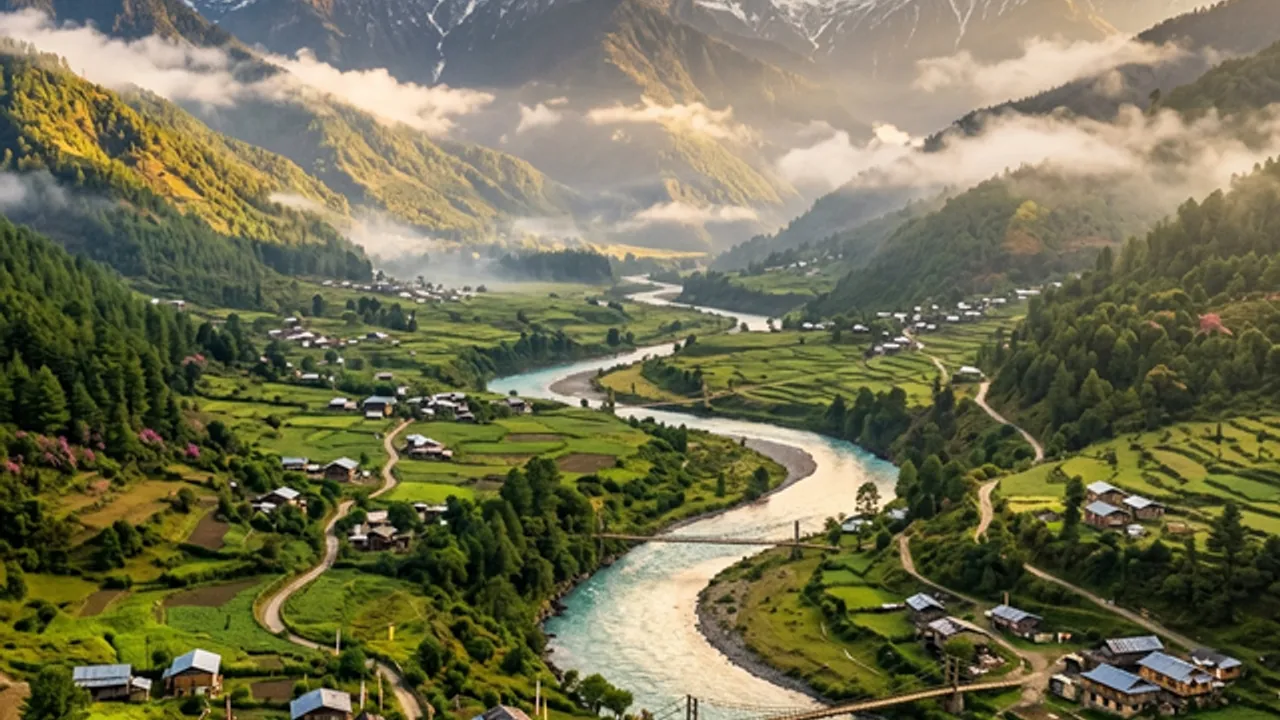
The mist arrives before the sun does. At 5:30 AM in Munnar, the tea gardens are invisible — just an expanse of grey-white cloud that sits in the valleys between the hills. Then the light comes from the east and the mist begins to lift, revealing rows of Camellia sinensis trimmed into precise geometric contours that follow the hill's curvature down to the valley floor. A tea picker in a yellow sari is already at work at the far edge, her basket filling. This is what Munnar's 12,000 hectares of plantation look like before the tour buses arrive — and this is the Munnar worth planning around.
"Munnar at dawn is a different planet from Munnar at noon. The mist, the pickers, the complete silence — stay an extra night just to see two mornings. The second one, you understand why people come back."— Priya Thomas, TravelBuddiz local host, Munnar (7 years guiding tea estate walks)

Why Munnar Is a Must-Visit in 2026
Munnar is not just about tea. It is about the specific quality of silence that exists at 1,600 metres in the Western Ghats — the kind you only find where the nearest city is four hours away by mountain road. It is about the Nilgiri Tahr, India's mountain goat, grazing on the grasslands above the tree line in Eravikulam National Park with casual indifference to human visitors. It is about the Neelakurinji — the shrub that covers Munnar's hillsides in purple once every 12 years, a bloom phenomenon so remarkable that the British built a railway to witness it in 1910.
In 2026, Munnar has improved significantly as a destination. Eco-tourism initiatives led by the Kerala Tourism Development Corporation (KTDC) have expanded community-based experiences beyond the standard bus-tour circuit. More estate-direct accommodation is available, local guide certification has been strengthened, and the state's plastic-free zone designations now cover much of the core tourist area.
12,000 ha Tea Estates
The largest contiguous tea-growing region in India, visible from almost every viewpoint in the district.
Nilgiri Tahr
India's endemic mountain goat, endangered globally, thrives in Eravikulam — one of India's conservation success stories.
Anamudi — 2,695 m
South India's highest peak, accessible via guided trek through Eravikulam's grassland ecosystem.
Hidden Waterfalls
Attukad and Lakkam falls require a short trail off the main road and reward with near-total solitude even in peak season.
Neelakurinji
The once-in-12-years purple bloom that covers the hillsides. Next full bloom expected in 2030 — the approach period begins earlier.
Estate Homestays
Stay inside working tea estates in Chinnakanal, Anayirangal, or Pallivasal — morning walks with the pickers included.
Best Time to Visit Munnar in 2026
Munnar's seasons are governed by the two monsoon systems that hit the Western Ghats. Unlike coastal Kerala, the hills receive both the southwest monsoon (June–September) and the northeast monsoon (October–November), which means rain is always a possibility — but never a reason not to come.
| Season | Months | Conditions | Best For |
|---|---|---|---|
| ✦ Peak Season | Sep – March | 10–25°C, clear skies, lush post-monsoon green | Trekking, wildlife, photography, all sights open |
| Summer | April – May | 20–28°C, pleasant days, cool evenings | Escaping plains heat, fewer tourists, lower rates |
| Monsoon | June – August | Heavy rain, mist, 15–22°C | Waterfalls at peak, lush green, budget travel |
How to Reach Munnar from Kochi, Coimbatore & Beyond
There is no railway connection to Munnar — the nearest station is Ernakulam (Kochi), approximately 130 km and 4–5 hours by mountain road. KSRTC state buses run multiple times daily from Ernakulam Bus Stand to Munnar town for approximately ₹180–₹250 — affordable, scenic, and no pre-booking required. Private taxis from Kochi airport cost ₹2,500–₹3,500 depending on vehicle type. From Coimbatore (Tamil Nadu), Munnar is 100 km via the Valparai road — a spectacular but slower mountain drive.
Top Places to Visit in Munnar

Eravikulam National Park
The primary reason serious nature travelers come to Munnar. The Nilgiri Tahr — India's endemic mountain goat, listed as Vulnerable on the IUCN Red List — has its largest wild population here, and they are so accustomed to respectful visitors that encounters at close range are routine. The grassland plateau at Rajamala, reached by TNSTC shuttle from the park entrance, sits above the tea line and offers views across the entire Munnar valley that redefine the word "panoramic."
The park also marks the base for the Anamudi circuit — South India's highest point at 2,695 metres. Full summit access is restricted to protect the ecosystem, but the surrounding trails offer views that are genuinely extraordinary.

Mattupetty Dam & Lake
The storage reservoir for Munnar's hydroelectric system is one of the Western Ghats' most beautiful bodies of water — flanked by shola forest and grassland, with mist rolling off the surface at dawn. Boating is available from the dam jetty, and the surrounding forest path is one of Munnar's better short walks for birdwatching (the Nilgiri Flycatcher and Black-and-Orange Flycatcher are commonly spotted).
The real reward comes in the early morning or late afternoon — the forest-grassland edge at Mattupetty is one of the most reliable spots in Munnar to observe wild elephants coming down to water. A local guide knows exactly which section of the shore to wait near.

Tea Museum (Nallathanni Estate)
Operated by Tata Tea at the Nallathanni Estate, this is the most comprehensive account of how Munnar's plantation system was built available to the public — from the first British planters in the 1870s who cleared the shola forest to the labor history of the Tamil tea workers who built the industry. Original colonial-era processing machinery, photographs, and documentation are all on display.
The tea tasting session at the end is genuinely educational — the difference between first flush, second flush, and orthodox versus CTC processing is explained in the context of actual samples. Buy directly from the estate shop; it is significantly better than market-blend teas sold on the main road.

Attukad & Lakkam Falls
Most tourists see Cheeyappara and Valara waterfalls from the road between Kochi and Munnar. These are fine, but they are also on every bus tour itinerary. Attukad Falls — reached via a 20-minute trail from the Pallivasal road — drops through a sequence of cascades surrounded by cardamom plants and shola edge forest. In October and November after the monsoon, the volume is extraordinary. You will typically have it to yourself before 9 AM.
Lakkam Falls (near Rajakkad, 22 km from town) is a forest department eco-tourism site with a longer trail through riverine forest. The trail itself is the point — more than the falls at the end, the walk reveals the transition from plantation monoculture to genuinely wild forest. A local guide is strongly recommended for both.
Pothamedu Viewpoint
The 6 km road from Munnar town to Pothamedu winds through the only landscape in India where tea, coffee, and cardamom grow simultaneously on the same hillside. The viewpoint at the end looks out over a vast interlocking patchwork of these three crops — different shades of green at different heights — that collectively covers the valley floor and the lower slopes in every direction.
Arrive before 7 AM for the mist still in the lower sections and the light coming in low from the east. This is one of the most photographed perspectives in Kerala for a reason — but most photographs are taken at 10 AM when the tour jeeps arrive. An hour earlier it is a completely different experience.
How to Experience Munnar Differently
The generic Munnar itinerary — bus to Eravikulam, photo at Pothamedu, boat at Mattupetty, back by 4 PM — misses almost everything that makes the place extraordinary. Here is what a community-guided Munnar experience looks like instead.
Estate Walk with the Pickers
A TravelBuddiz local host can arrange early morning walks through private estates where you walk alongside the pickers, learn the difference between hand-plucked and machine-harvested tea, and understand the seasonal rhythms of a working plantation. These are not tourist experiences — they are community access.
Homestay in Chinnakanal or Anayirangal
These villages sit higher and deeper into the estate zone than Munnar town. Staying with a local family here means authentic Kerala meals, evening conversations about life at altitude, and morning views from the veranda that no hotel can replicate. Prices start at ₹800/night including dinner and breakfast.
Shared SUV with Verified Companions
Munnar's winding mountain roads are genuinely best in a private vehicle — flexibility to stop, to go at dawn, to take the detours. Split a private SUV with 3 compatible travelers through TravelBuddiz and the cost drops to less than a standard tour jeep, with complete freedom of schedule.
Spice Farm Visit
The cardamom and pepper farms in the Munnar area are among Kerala's best. A guided visit — arranged through local hosts — takes you through the cultivation, harvesting, and drying process, followed by purchasing directly from the farm at prices significantly below market. The cardamom grown at this altitude has a complexity unavailable at sea level.
A morning tea estate walk at 6 AM — this is the Munnar that no bus tour sees
Where to Eat and Stay in Munnar
Munnar's food scene is deeply rooted in Kerala cuisine — rice-forward, coconut-heavy, fish-forward at lower altitudes, and dominated by the extraordinary local spices. The best meals in Munnar are not in restaurants but in homestay kitchens, where a host family will produce an onam sadya-style spread on banana leaf for dinner that costs less than a mid-range restaurant plate and tastes incomparably better.
🍽️ Food & Accommodation Tips from Local Hosts
For the best Kerala meals: Ask your homestay host if they will cook dinner. The standard answer is yes, always. A full Kerala dinner — fish curry, sambar, rasam, aviyal, rice — at a family homestay costs ₹150–₹250 and is categorically better than any restaurant equivalent. This is not an exaggeration.
For budget accommodation: The area around Pothamedu (6 km from town) has the highest concentration of value-for-money guesthouses with estate views — from ₹600/night. Town-centre accommodation is convenient but adds a tourist premium with none of the landscape benefit.
For coffee: Munnar grows remarkable coffee alongside its tea — specifically Robusta and Arabica at the lower elevations near Chinnakanal. The local estate-processed coffee, available from farm-direct stalls, has a richness entirely different from market-blend versions. Ask your host where they buy their coffee.
For groups: Booking a full homestay property for 4–6 people through TravelBuddiz typically costs ₹2,000–₹3,500 for the full house per night — split among the group, this is often cheaper per person than a hostel dorm while providing a private kitchen, garden, and estate views.
What to Buy in Munnar
Practical Travel Tips for Munnar 2026
Pack Light Woolens
Even April–May evenings at 1,600 m drop to 10–14°C. A light fleece or jacket is essential year-round. Mornings require it regardless of season.
Reusable Bottle Only
Munnar is a designated plastic-free zone in core areas. Carry a reusable bottle — refills are available at homestays, guesthouses, and many cafes.
Use UPI Everywhere
Digital payments are widely accepted including at estate shops and village markets. Keep ₹500–₹1,000 cash for the most remote stalls and auto-rickshaw rides.
Go Early, Always
Every major sight in Munnar — Eravikulam, Pothamedu, Mattupetty, the waterfalls — is best before 8 AM. The tour jeeps start arriving by 10 AM.
Connectivity
BSNL has the widest coverage in remote estate areas. Jio and Airtel work well in town and on main roads but can drop in valleys and deep estate zones. Download offline maps.
Book Local Transport in Advance
During peak season (Dec–Jan), good-quality local taxis and SUVs book up. Arrange through your homestay or a TravelBuddiz host before arrival.
Frequently Asked Questions About Munnar
Munnar is Best Experienced Slowly, Early, and with the Right Company
The travelers who leave Munnar feeling like they saw it are the ones who arrived before the mist lifted, walked through an estate before breakfast, and stayed long enough to see two mornings. TravelBuddiz connects you with the local hosts and verified companions who make that version of Munnar possible.
Explore Munnar Group Trips → Find a Munnar Local Host